

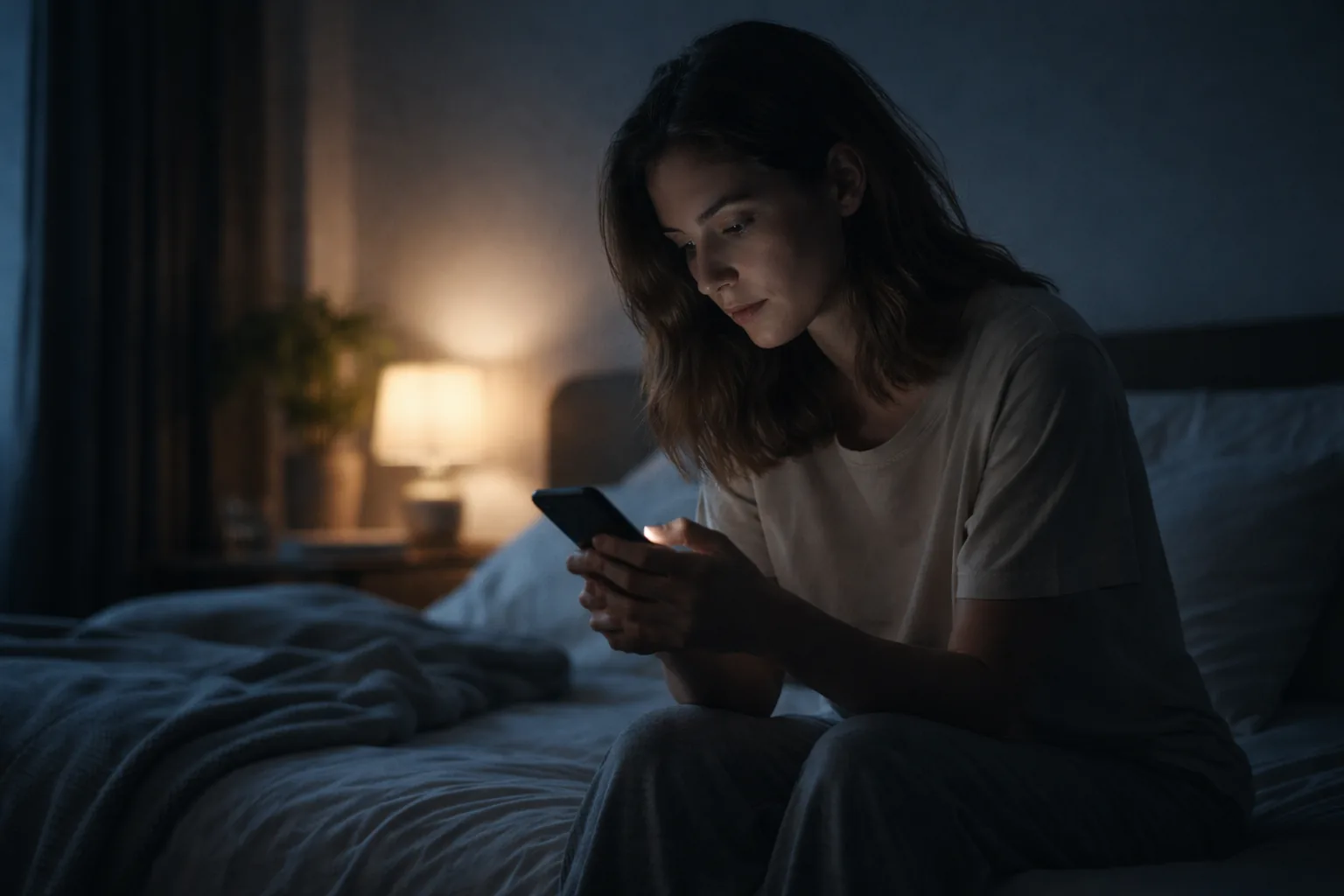
Why night scrolling feels harder to resist
Doomscrolling usually wins at night because your energy is low and your brain wants relief, not effort. The phone offers novelty, distraction, and a fast emotional shift, which makes it feel like the easiest option in the room.
That is why willpower-only plans often fail. If the phone is next to your pillow and every other bedtime option takes more effort, your late-night self will usually choose the path with the least resistance.
Shrink the loop instead of fighting it
A better strategy is to interrupt the loop earlier. Move the charger away from the bed, log out of the apps that trap you most, and decide what you will do when the first urge appears.
That replacement should be boring in a good way. A podcast, a paperback, a saved breathing exercise, or even a glass of water can be enough to break the automatic reach-scroll-repeat pattern.
- Charge your phone outside arm’s reach
- Pick one default bedtime replacement before the evening starts
- Set a small cutoff like “10 minutes less” instead of “never scroll again”
Use tracking to spot your real trigger
Most people think the problem is the phone itself, but the trigger is often stress, loneliness, unfinished work, or wanting to avoid tomorrow. Tracking a few nights of behavior helps you see the emotion underneath the habit.
Once you notice the pattern, you can build a response around the trigger. If anxiety is the cue, calming tools help more than stricter rules. If boredom is the cue, you need a better off-ramp than endless feeds.
Make better sleep the visible reward
Stopping doomscrolling feels abstract, but sleeping better is concrete. When you track bedtime wins, morning energy, and fewer “I lost an hour again” nights, the new pattern starts to feel worth protecting.
The point is not becoming perfectly offline. The point is building a bedtime setup where rest is easier to choose than stimulation.