

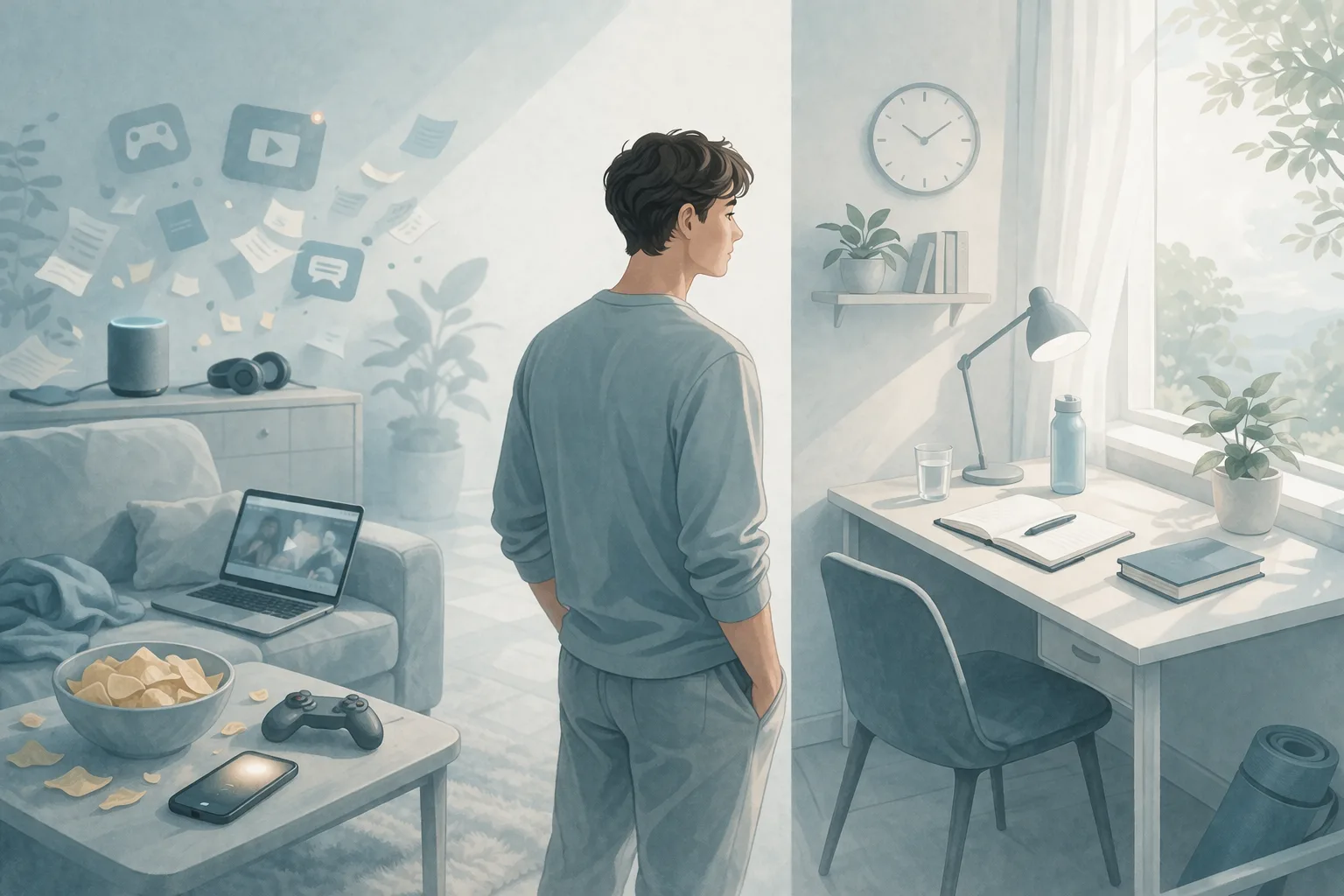
Motivation gets too much credit
Motivation feels important because it is emotionally vivid. You notice it when it is high and panic when it disappears. But behavior is often shaped long before motivation enters the picture. The environment is already suggesting, allowing, encouraging, or frictionlessly delivering certain choices.
That is why people can feel deeply sincere about changing and still keep ending up in the same loops. Their environment may still be doing quiet work in the opposite direction.
Cues and friction are constantly making decisions easier or harder
What is visible gets chosen more. What is easy gets repeated more. What is one tap away gets used more. What requires setup, waiting, effort, or exposure gets postponed more. These are not minor details. They are core habit forces.
A phone on the pillow, snacks on the counter, apps already open, no shoes near the door, a cluttered desk, no plan for the evening, no easy meal, no prepared off-ramp from stress: all of these shape behavior before conscious intention gets a clean chance to speak.
- Visible cues increase repetition
- Low-friction options win more often than good intentions
- Tiny environmental changes can dramatically shift vulnerable moments
A bad environment can make a good person feel inconsistent
This is one reason people become too harsh with themselves. They interpret repeated failure as a moral weakness when it may be partly architectural. If the whole setup keeps pushing the same loop, even a serious person can look unreliable inside it.
That does not remove responsibility. It just makes the responsibility more practical. Instead of trying to become permanently motivated, you start asking better questions. What keeps cueing the habit? What makes the healthy action annoying? What can be hidden, moved, simplified, or prepared earlier?
Behavior change gets easier when the room starts helping
The most useful environments do not demand constant heroism. They reduce temptation, make desired actions visible, and lower the start-up cost of doing the right thing. That does not mean environment is everything, but it often decides far more than people admit.
This is good news because environment can be redesigned. You do not have to wait until your personality changes. Sometimes moving one object, deleting one shortcut, preparing one alternative, or protecting one time window creates more change than another week of trying to feel inspired.